Restoration of paintings
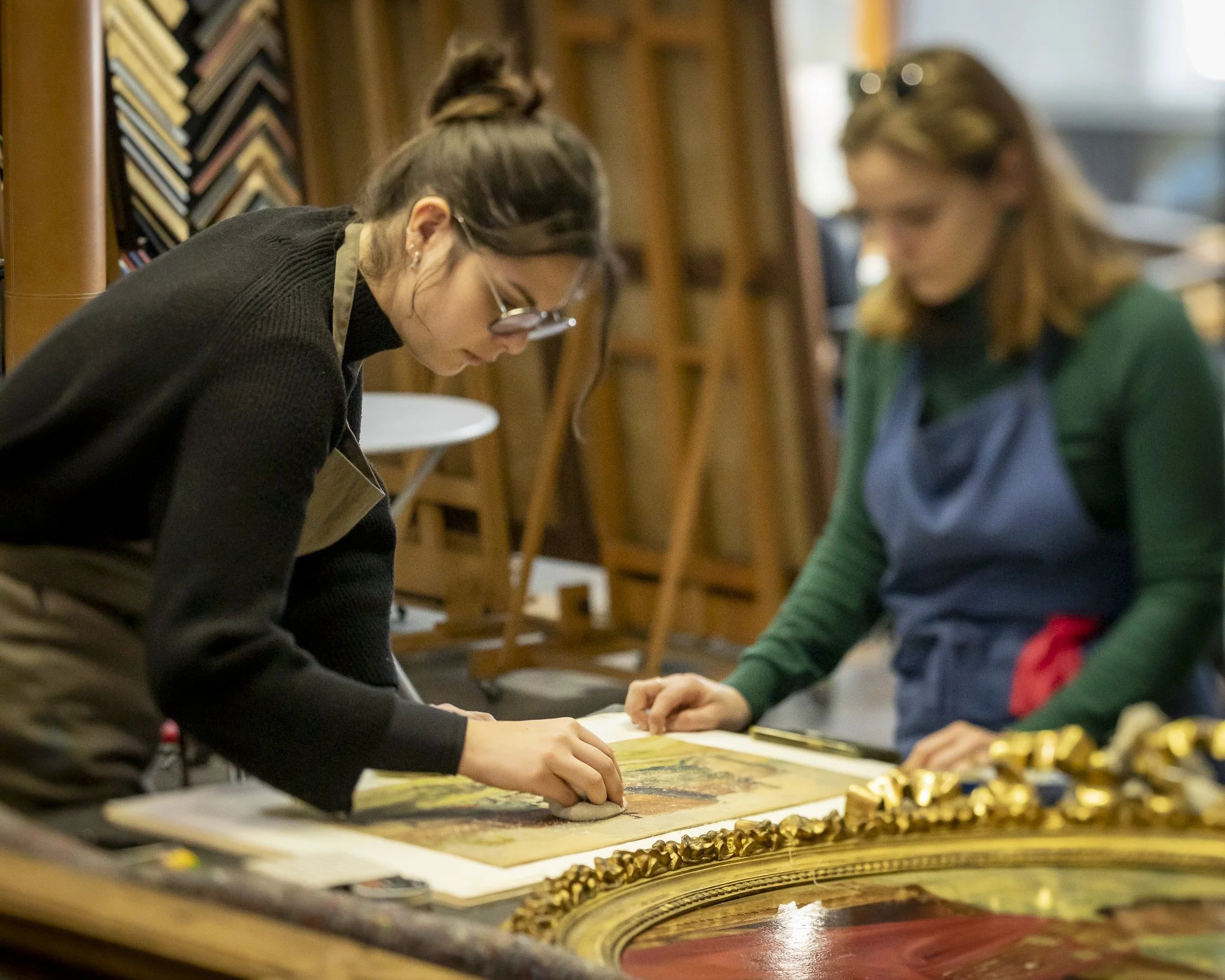
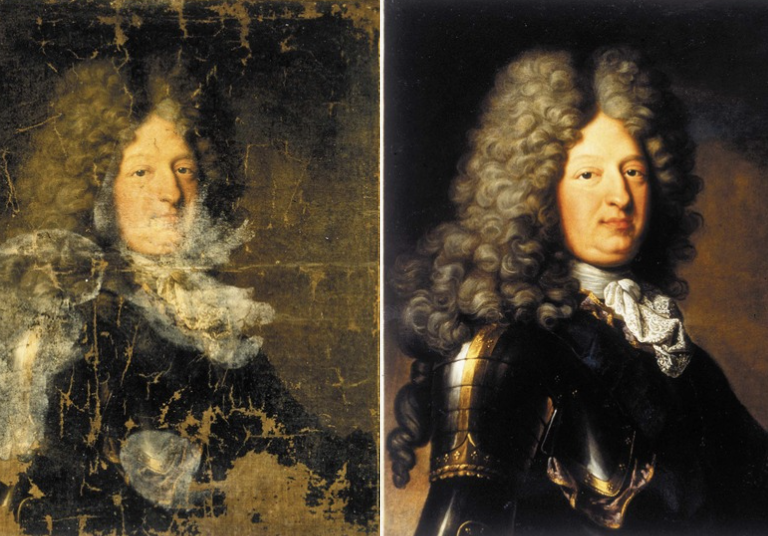
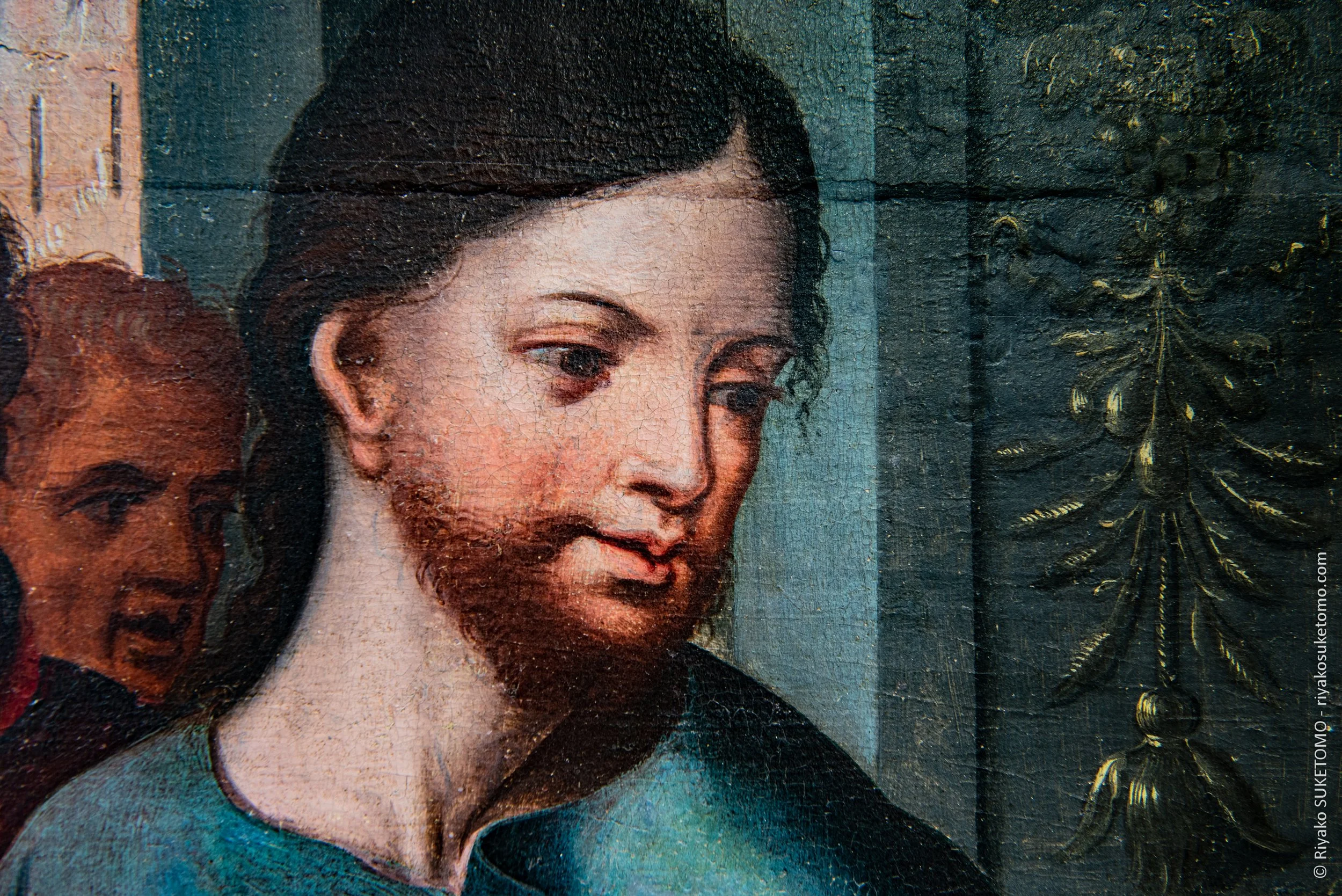
The restoration and conservation of a painting aim to slow down or halt its deterioration, restore its aesthetic qualities, and increase its market value.
From the smallest to the largest formats (our workshop is equipped to handle even very large pieces), from the oldest to the most contemporary works, from the humblest creation to the most prestigious signature, each artwork is treated as a unique case.
The entire team at L’Atelier du Temps Passé is at your service to address all restoration and/or conservation challenges as accurately as possible.
Respect for International Ethical Standards
Respectful of the works entrusted to it, L’Atelier du Temps Passé applies the fundamental principles of cultural heritage restoration and conservation to all its treatments.
Stability
The materials used in various treatments must remain stable over time and meet the specific requirements of cultural heritage restoration and conservation.
Reversibility
Materials used in restoration and conservation are always more fragile than the original materials so they can be removed at any time without causing any harm to the original work.
Legibility
The intervention aims to restore aesthetic unity to the work as a whole, avoiding visual discontinuities that could hinder the reading of the iconographic subject.
Old Master Paintings
The restoration and conservation of a painting aim to slow down or halt its deterioration, restore its aesthetic qualities, and increase its market value.
Modern Art
The modern period in painting refers to the era between the 1870s, with the emergence of the Impressionists, and the 1950s, when Abstract Expressionism and Pop Art appeared.
During this time, artists gradually abandoned traditional materials and techniques to use industrially manufactured materials and experimented with new painting methods (new supports, color “reserves” revealing the background, generous impasto, absence of varnish, etc.).
Contemporary Art
The restoration of contemporary art often involves atypical cases. Particularly sensitive to shocks and handling, these works—usually made with industrial materials and sometimes executed with imprecise techniques—deteriorate more quickly than so-called “classic” works.
With diverse supports—acrylic, vinyl, or oil-based paints, as well as plastic, metal, organic, and composite materials—each work must be treated individually to address a wide range of restoration challenges.
Conservation Restoration
Relinings
Backings
Thread-by-thread repairs

Aesthetic Restoration
Cleaning (removal of dirt, varnish reduction, overpaint removal)
Filling / gap repair
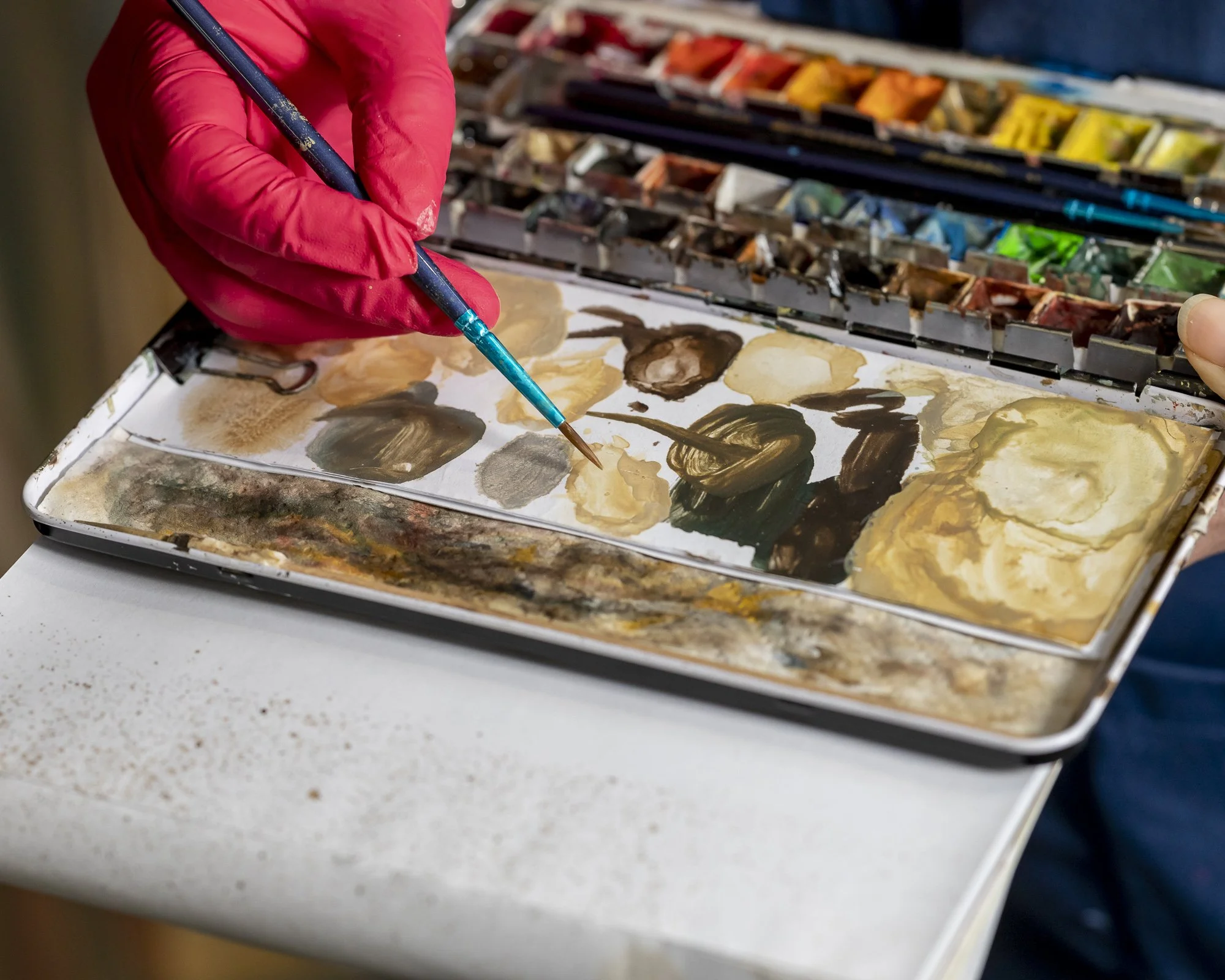
Retouching / reintegration
Varnishing

Curative Restoration
Anoxia treatment for infested wood
Antibacterial treatments (mold and fungi)
Curative Restoration
Mechanical protection of the back
Advice on hanging, climate conditions, and lighting